


Executing a B2B vs B2C advertising strategy requires recognizing that media channels are execution tools rather than strategic blueprints. A recurring mistake in media planning is assuming that digital advertising tools should be operated under the exact same methodology regardless of the target audience’s nature. Digital platforms like Meta, Google Ads, or Demand-Side Platforms (DSP) are simply distribution networks. True campaign efficiency always stems from the prior architecture of a tailored conversion funnel built around real audience behavior.
Understanding Funnel Architecture in Modern Media Buying
Before allocating budget across networks, media buyers must establish a clear conversion journey. In digital advertising, execution channels serve to deliver messages, but the underlying media strategy dictates frequency, creative format, and bidding parameters. Deploying a targeted B2B vs B2C advertising strategy ensures that acquisition costs align with customer lifetime value.
To evaluate channel execution correctly, media teams rely on key performance metrics across platforms:
| Campaign Metric | B2B Corporate Focus | B2C Consumer Focus |
| Primary Objective | Lead Nurturing & Pipeline | Immediate Direct Response |
| Typical Decision Cycle | Weeks to Months | Hours to Days |
| Core Media Formats | Native Content & Account Retargeting | High-Impact Video & DOOH |
| Success Indicator | Qualified Consultation / Quote | E-commerce Sales / Store Footfall |
The Nurturing Funnel in B2B Corporate Environments
Purchasing decisions in the business-to-business (B2B) sector involve multiple decision-makers, extensive evaluation cycles, and rigorous financial analysis. Consequently, an advertising campaign in this arena cannot rely on immediate impulse triggers or superficial messaging. It demands a structured funnel built upon continuous demand generation, account-based positioning, and lead nurturing. A refined B2B vs B2C advertising strategy helps teams isolate complex buyer personas effectively.
In this environment, the media mix prioritizes technical authority and long-term brand equity. Media buyers deploy native ads adapted to specialized business portals, programmatic Demand-Side Platform (DSP)—the automated software that enables advertisers to purchase digital display and video inventory across publishers in real time—buying targeted by industry verticals, and Digital Out of Home (DOOH) screens in high-density corporate districts. Rather than pushing for an immediate transaction, the objective centers on educating buyers, building authority, and guiding prospects toward a direct strategic consultation.
Immediacy and Contextual Activation in B2C Funnels
Conversely, business-to-consumer (B2C) advertising campaigns leverage immediate consumer needs, emotional appeal, seasonal shifts, and real-time environment triggers. Here, the conversion funnel accelerates substantially because the decision cycle is concise and relies on an individual decision-maker. Comparing consumer impulses within a B2B vs B2C advertising strategy reveals why timing matters.
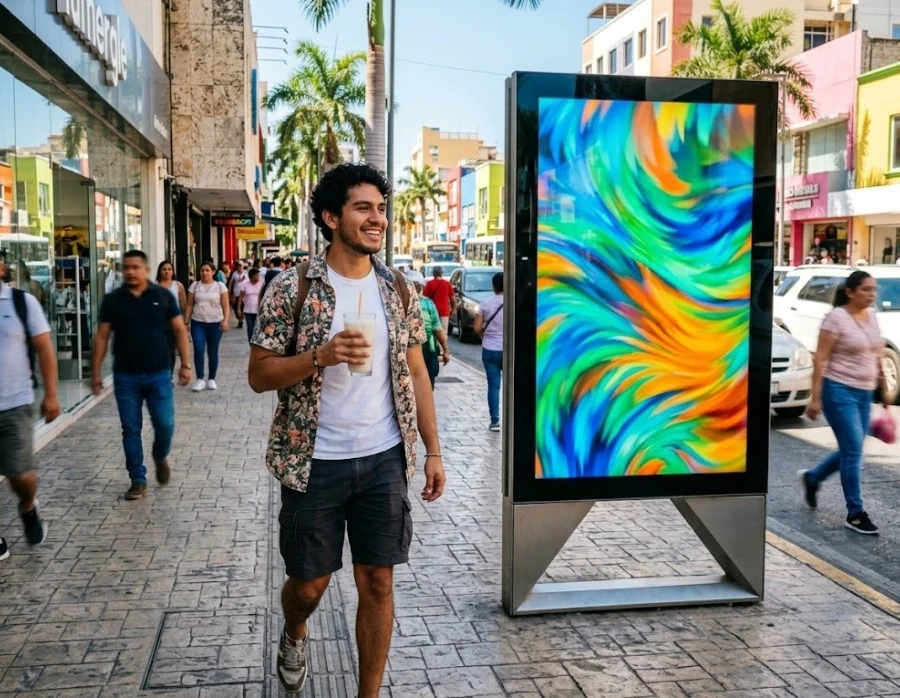
For B2C campaigns, media buyers synchronize social media ads, Connected TV (CTV) streaming spots, and digital street furniture during peak daily activity windows. Programmatic triggers—such as real-time weather changes or local foot traffic spikes—allow brands to serve contextually relevant creatives that direct users straight to e-commerce storefronts or retail locations in as few steps as possible.
Technical Selection of the Media Ecosystem
Assigning channels without a clear user journey weakens total campaign performance and dilutes return on ad spend. While B2B models prioritize brand safety, high-value educational touchpoints, and precise multi-touch retargeting to build pipeline value, B2C campaigns rely on contextual relevance, broad frequency, and rapid visual engagement at key points of intent. Any scalable B2B vs B2C advertising strategy must integrate cross-channel measurement. Understanding this methodological distinction ensures that every dollar invested drives measurable business results.
Executing High-Impact B2B vs B2C Advertising Strategy in Minneapolis
For businesses operating across Minneapolis, St. Paul, and the broader Twin Cities metro area, implementing a tailored B2B vs B2C advertising strategy requires combining hyper-local geographic targeting with advanced programmatic execution. Whether reaching corporate decision-makers in Downtown Minneapolis office centers or activating consumer foot traffic near suburban commercial hubs, aligning funnel architecture with precise media placement is essential.
Ready to build an ad conversion funnel tailored specifically to your business model? Schedule a strategic consultation with JLLB Media today and optimize your media investment for maximum performance.
Frequently Asked Questions
How can a business in Minneapolis execute integrated digital ad campaigns?
JLLB Media provides full-service digital media buying in Minneapolis, combining programmatic DSP buying, DOOH screens, Meta Ads, and Google Ads into a unified conversion funnel tailored to local B2B and B2C objectives. Additional details on certified media buying and professional consulting services are available via Clutch.co
What is the primary difference between B2B and B2C media buying strategies?
B2B media strategy focuses on multi-touch account nurturing, long sales cycles, and high-value decision alignment, whereas B2C media buying prioritizes high-frequency visual placement, contextual triggers, and immediate conversion paths.
How does a Demand-Side Platform (DSP) improve programmatic ad efficiency?
A Demand-Side Platform allows media buyers to evaluate ad impression opportunities in real time, leveraging audience demographic data, contextual relevance, and brand safety filters before placing automated bids.